Brita vs. PUR Plus: Which Faucet Water Filter is Best?

As homeowners prioritize health-conscious kitchen trends for 2025, water quality has become a non-negotiable part of home infrastructure. While we have discussed permanent under-sink RO systems, many people prefer a "No-Tool" solution that provides filtered water instantly for drinking and cooking.
In 2026, Faucet-Mounted Filters (or tap filters) are a global best-seller. They allow you to toggle between standard and filtered water with a single switch. Today, we compare the two giants of the industry: the PUR Plus Vertical and the Brita Faucet Mount.
The Cheat Sheet: Quick Comparison
Feature | ||
Filter Life | 100 Gallons (3 Months) | 100 Gallons (3 Months) |
Lead Certification | NSF Certified (Removes 99%) | Reduces Chlorine/Asbestos |
Mineral Technology | MineralCore (For Taste) | No-Wait High Flow |
Filter Status Light | Yes (Electronic) | Yes (Electronic) |
Finish Options | Grey, White, Chrome | White, Chrome |
Price Est. | ~$20 - $30 | ~$20 - $35 |
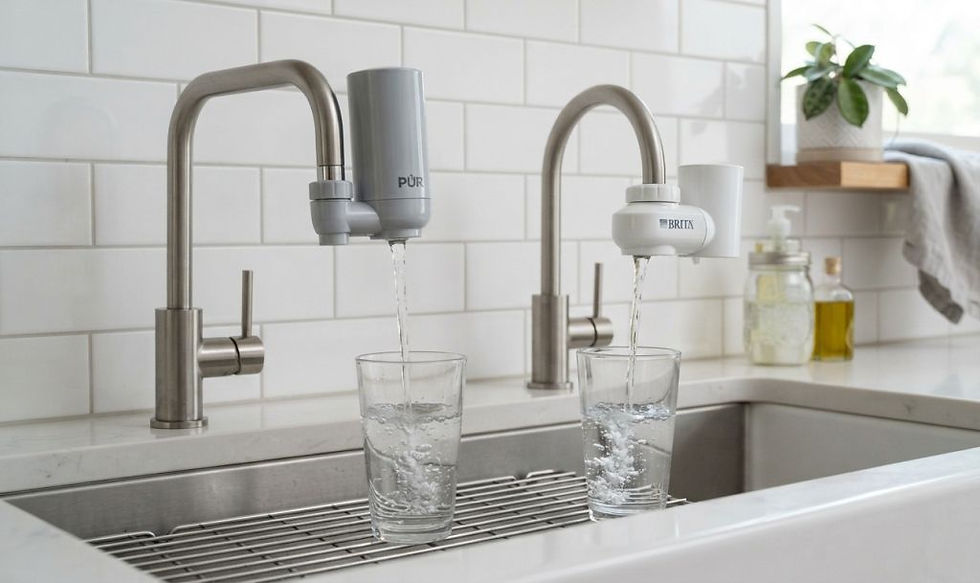
1. The Purity Specialist: PUR Plus Vertical System
PUR has long been recognized as the technical leader in faucet filtration, focusing on removing heavy metals that standard carbon filters miss.
Pros:
Superior Lead Removal: The PUR Plus is specifically engineered to remove 99% of lead and 70 other contaminants. This is the essential tool for those living in older homes with aging pipe infrastructure.
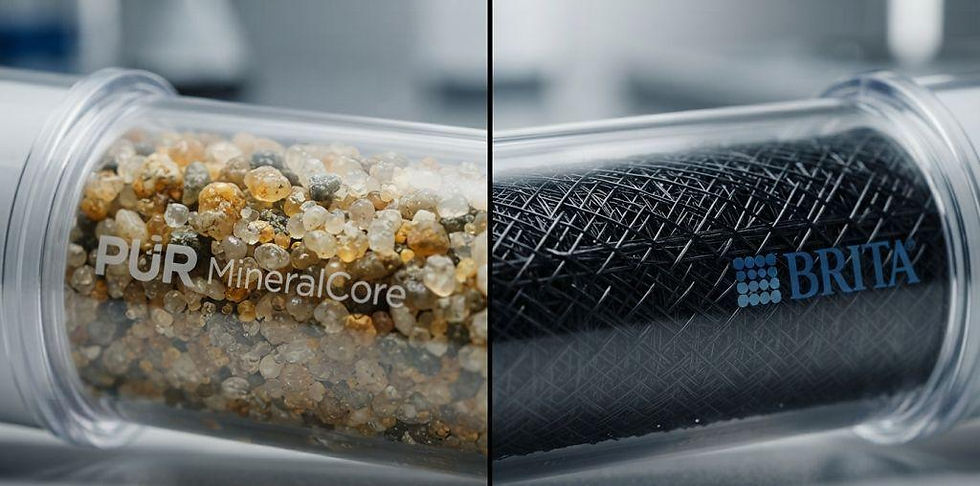
MineralCore Technology: Unlike systems that leave water tasting "flat," PUR filters the water over natural minerals to provide a crisp, bottled-water taste.
Limescale Protection: The vertical design is highly effective at reducing the limescale deposits that often ruin electric gooseneck kettles.
Cons:
Slow Flow: Because the filtration is so dense, the water stream is noticeably slower than the Brita.
Vertical Bulk: The "Vertical" design sticks up quite high, which can be an issue if you have a low-hanging kitchen cabinet.
2. The High-Speed Classic: Brita Faucet Mount System
Brita is the global household name, and their faucet mount is designed for the user who prioritizes convenience and flow speed.
Pros:
No-Wait Filtration: Brita's main advantage is speed. It filters water nearly 2x faster than the PUR Plus, making it the better choice for large families or filling large pots for cooking.
Compact 360° Design: The horizontal layout is more discreet and fits better on modern kitchen islands where you want "Invisible Tech."
Filter Universalism: Brita replacement filters are available in almost every grocery and hardware store globally, reducing the "maintenance friction" of your home infrastructure.
Cons:
Lower Filtration Density: While excellent for taste and chlorine removal, it carries fewer certifications for heavy metals like lead compared to the PUR Plus model.
Critical Decision Guide: Safety vs. Flow Speed
Which faucet water filter is best for old pipes?
Choose PUR Plus if your primary goal is Safety. If you are concerned about lead, mercury, or pesticides, the dense MineralCore filtration of the PUR is the superior piece of infrastructure. It is a vital addition to any home maintenance checklist.
Choose Brita if your primary goal is Convenience. If your tap water is safe but just tastes like chlorine, the Brita’s high-speed flow and easy-to-find replacements make it a clever home hack for better hydration.
Final Verdict: Which One Should You Buy?
Buy the PUR Plus If:
You are concerned about lead and heavy metal contamination.
You want the "crisp" taste provided by MineralCore technology.
You have a high-arc faucet with plenty of vertical clearance.
Buy the Brita If:
You want the fastest possible flow for filling pots and bottles.
You have a small kitchen and want a lower-profile device.
You want a low-cost entry point into home water infrastructure.
To ensure your plumbing remains as clean as your water, check out our guide to the best smart water leak detectors.
Disclosure: This post contains affiliate links. If you make a purchase through these links, we may earn a small commission at no extra cost to you.


Comments